You’d likely know if you ever met the late winemaker Josh Jensen. He was tough to miss and hard to forget. My mental image of him always includes a kerchief around the neck, a loud shirt, and red jeans.
“So he’s like 8 feet tall, right? He has the wingspan of a condor,” remembers winemaker and sommelier Ted Glennon. “He has the kind of sense of humor where he can just crack a joke and then hang out there and see if somebody will tug on the punch line. You know, in the old West, the cowboys were often kind of dandies, and he was that sort of character. There was a Versace outlet in Gilroy. It broke his heart when they closed.”
The indelible man made equally memorable wines and, importantly, began a journey in pursuit of California Pinot Noir that laid a foundation upon which countless others have built.
The Five-decade Odyssey
Jensen, who was born in Akron, Ohio, but grew up in the San Francisco Bay Area, studied History at Yale University and then went on to get a Master’s degree in Social Anthropology at Oxford’s New College. Throughout this educational journey, Jensen deepened what was already a growing appreciation for the food and wine of France. After graduation, he decided to immerse himself in it.
In 1970, he talked himself into a harvest intern job at Domaine de la Romanée-Conti, and what began as a passion quickly became an obsession. He would go on to work a couple of harvests at the then-fledgling Domaine Dujac after befriending its founder, Jacques Seysses.

Enthralled with Pinot Noir and firmly convinced of the magic to be found in Burgundy’s limestone terroirs, he returned to California and began the hunt for limestone terroir suitable for growing Pinot Noir. Using a combination of geological survey maps and good old-fashioned road mileage, Jensen eventually made his way to Mount Harlan, a 3,278-foot peak in the Gabilan Mountains south of Hollister, CA.
There, he found one of the state’s larger deposits of pure limestone coupled with an elevation and microclimate that he believed would be suitable for growing great American Pinot Noir. An old abandoned “calera,” or lime kiln, on the hillside property sealed the deal, and in 1973, he bought a 324-acre plot, hauled a trailer up to the site, and began planting his vineyards.
He would eventually plant a little more than 80 acres across six distinct vineyard sites: Jensen, de Villiers, Ryan, Mills, Reed, and Selleck, each with different aspects, slopes, and elevations up to 2500 feet. The vineyards were Pinot Noir-focused but also contained Chardonnay, Viognier, and Aligoté.
One of the greatest mysteries surrounding Calera has to do with where Jensen procured the budwood used to plant his earliest vineyard plots. All we know is that it came from Burgundy and that Jensen was famously tight-lipped about the specifics. Planted initially at Chalone Vineyards, thanks to a close friendship with Dick Graff at the time, these cuttings and their progeny would eventually become known as the Calera Clone of Pinot Noir, which is characterized by slightly larger, looser clusters than the more popular Dijon clones of today. Calera berries are also slightly on the large side, with thicker skins.
Technically, the Calera clone is not a clone at all but what you might call a “heritage selection,” propagated through friends-and-neighbors sharing over the past few decades.

Sticking To His Guns
Jensen learned how to make Pinot Noir in Burgundy, and as far as he was concerned, that formula required no adjustments. So for the next five decades, the man on the mountain made wine the way he thought it ought to be made: harvest the grapes, ferment them 100 percent whole-cluster with ambient yeasts and no temperature control, press them into roughly 30 percent new French oak barrels, and age them between 16 and 18 months before bottling them unfined and unfiltered.
Early on, Jensen was joined by college biochemistry major Steve Doerner, who would work alongside him for his first 14 vintages and who does a lovely job capturing what those early years were like in his interview with Levi Dalton and the I’ll Drink to That! podcast.
“Fifty years is a short time in the wine business, but fifty years is a long time for Calera” — Winemaker Mike Waller
For the last 19 years, the winemaking has largely been done by Mike Waller, who got the job offer to be the assistant winemaker at Calera almost by accident. Waller had gotten to know Jensen over the years while working as assistant winemaker at Chalone.
“I had decided it was time for me to move on from Chalone,” says Waller. “So I called up Josh to ask if he would be a reference for me. He said, ‘It’s so funny that you would call me, because I was about to call you. I just pulled out your old resumé and we want to hire you.’ And that was the first day of the rest of my life.”
After 14 years there, Waller became the sole winemaker when Jensen passed in 2022 and continues under the winery’s new ownership by the Duckhorn portfolio, after Jensen sold the winery in 2017.
“Fifty years is a short time in the wine business, but fifty years is a long time for Calera,” says Waller. “My job as winemaker is to continue the same traditions that Josh passed on to me, and my job is to find a successor so I can pass on those traditions to the next generation. We’ve always made these wines the same way.”
In fact, the most dramatic change that Waller or anyone has made to winemaking at Calera has been the introduction of egg-white fining to help combat the estate’s occasionally intense tannins.
Waller and his team continue to farm the old vines that Jensen planted in the Seventies, as well as newer plantings from later years, despite a reduction in yields from what were never particularly generous vineyards to begin with.

“On average, we used to get around one and a half tons of fruit per acre,” says Waller. “Nowadays these vineyards are closer to one ton per acre.”
In particularly tough years, due to drought, poor fruit set, frost, or all of those factors combined, yields have sometimes been as low as .45 tons per acre, as they were in 2022.
Despite this kind of adversity, Waller says the site nevertheless always manages to deliver. “Even when all the cards are dealt against us, we still have acidity and cool nights on our side. No matter what the weather is, in conditions where you would see acid dropping out in any other vineyard, we always maintain abundant acid in our wines.”
Calera became certified organic in 2008, but Waller says that was merely a formality. “Josh had essentially been farming organically for at least ten years before that.”
In 1990, Mount Harlan was declared its own American Viticultural Area.
Single-vineyard Or Bust
Jensen would have been considered enough of a pioneer merely for having planted and focused on Pinot Noir in the early 70s in California. But in addition to paving the way for that grape to become a force in California wine, Jensen also insisted on bringing single-vineyard wines to market at a time when that was nearly unheard of in California.
Heitz launched its 1966 vintage of Martha’s Vineyard Cabernet in 1971, which is widely regarded as Napa’s first vineyard-designated wine. Ridge made its first Monte Bello in 1962 and its first Geyserville in 1966. Several other producers, such as Chalone and Mount Eden, were effectively making single-vineyard wines in the early 1970s, but they bore the name of the estate rather than a more specific vineyard name.
Jensen’s Pinot Noirs, then, were likely the first California Pinot Noirs to carry specific vineyard names on their labels, a feature that befuddled many of his earliest customers.
“When Josh went out to the markets in New York, just trying to sell these wines, he would get some pushback,” says Waller. “People would be like, ‘Why are you trying to sell me three different Pinot Noirs?’ Josh could have easily decided, ‘Well, I’m just going to blend all these together and see if I can sell them,’ but he stuck with his guns and wanted to sell these and sell Americans on the idea of site-specific wines.”
This may well be the most impactful element of Jensen’s rich legacy, along with the heritage selection that bears the Calera name.

Even Better Aged
Despite Jensen’s allegiance to winemaking principles derived from his time working in Burgundy, there’s not much resemblance between Calera Pinot Noirs and fine Burgundies, save perhaps their longevity. Calera Pinot Noirs regularly clock in between 14.5 percent and 15 percent alcohol. They’re grown in a very hot region of California and really only exist thanks to the elevation of their growing sites and the unique cool airflow that comes up from the plunging, frigid depths of Monterey Bay through the Salinas Valley.
This natural air conditioning significantly moderates the region’s heat, allowing the retention of acidity while letting the sunshine offer significant UV exposure throughout one of the longest growing seasons anywhere in the wine world.
The lack of temperature control in fermentation and the use of 100 percent whole clusters mean that, along with their general state of ripeness, these end up robust wines with tannins that can be surprisingly burly, especially for modern Pinot Noir lovers. To put a finer point on it, depending on site and vintage, some of these wines can be pretty tough to drink upon release.
But invariably, with time, they transform, evolve, transcend, and ultimately triumph over any generalization one might care to make about the relationship between alcohol levels, ripeness, whole-cluster usage, and ageability. At 10 years, Calera Pinot Noirs are delicious. At 20, delightful. And at 30 or more, they are often mind-blowing.
Jensen knew this well, which is why I don’t think I ever attended a wine event where he wasn’t pouring, in addition to his latest releases, some library vintage that often proved to be the highlight of the tasting.
In an era when California Pinot Noir has shifted lighter, leaner, and more vibrant, usually for the better as a whole, Calera Pinot Noirs confidently remain a favorite anachronism of an earlier era of California Pinot. An era pioneered by a tall, well-dressed stranger who walked into town and set down roots that still bear impressive fruit even today.

Tasting Notes
The majority of the tasting notes below were made at a 50th Anniversary celebration of Calera Vineyards held by the Duckhorn group earlier this year, featuring wines directly from the extensive library of back vintages at Calera. A few of the contemporary vintages were tasted as press samples sent to me directly. I have included links to purchase wines where the vintage in question is still available for sale from online merchants. I happen to know that K&L Wines received a large chunk of back vintages directly from Jensen’s estate, and so are quite a reliable source for these wines. I myself have purchased a number of vintages back to the early 1980s and generally been very pleased with the bottles.
Reed Vineyard

The Reed Vineyard was planted to Pinot Noir in 1975 on a north-facing slope of limestone soils with loamy characteristics. It covers 6.4 acres. By dint of its aspect, Reed tends to be one of, if not the latest site to be picked at Calera, with Pinot Noir occasionally getting harvested in mid or even late November. Its tannins tend to be somewhat softer and more approachable than some of the other wines, and it often carries a spicy note with redder fruits than some of the other wines in the portfolio.

2022 Calera “Reed Vineyard” Pinot Noir, Mt. Harlan, Central Coast, California
Medium garnet in the glass, this wine smells of raspberries, cherries, and dusty, brambly herbs. In the mouth, dusty tannins coat the palate, as intense raspberries, cherries, and cranberries mix with road dust and dried herbs, cooking spices, and a hint of dried flowers. Citrus peel lingers in the finish. The muscular tannins stiffen slightly over time. 14.5% alcohol. Score: between 9 and 9.5. Cost: $100. click to buy.
2021 Calera “Reed Vineyard” Pinot Noir, Mt. Harlan, Central Coast, California
Medium garnet in the glass, this wine smells of white tree flowers, raspberries, dried herbs, and oak. In the mouth, raspberry, cherry, and cranberry flavors are shot through with nutty oak and hints of dried herbs. Mellow, fine-grained tannins coat the mouth and stiffen slightly with time. Very good acidity. 14.5% alcohol. Score: between 9 and 9.5. Cost: $95. click to buy.
2016 Calera “Reed Vineyard” Pinot Noir, Mt. Harlan, Central Coast, California
Light to medium garnet in the glass with ruby highlights, this wine smells of cedar, red apple skin, raspberries, and potpourri. In the mouth, dried citrus peel, raspberries, dried flowers, and dried cherries are wrapped in powdery, mouth-coating tannins that stiffen slightly as the wine finishes with a hint of soy sauce and orange peel. 14.2% alcohol. Score: between 9 and 9.5. Cost: $140.
2008 Calera “Reed Vineyard” Pinot Noir, Mt. Harlan, Central Coast, California
Medium ruby in color with a hint of orange at the rim, this wine smells of red apple skin, cedar, dried raspberries, dried flowers, and a darker, savory olive note. In the mouth, mouthwatering and juicy flavors of red apple skin, potpourri, dried herbs, and roasted beets mix with intense citrus oil, frankincense, and beautiful dried floral notes. Fantastic. 14.9% alcohol. Score: around 9.5. Cost: $200.
1996 Calera “Reed Vineyard” Pinot Noir, Mt. Harlan, Central Coast, California
Medium ruby in the glass with bricking at the rim, this wine smells of aromatic herbs, dried flowers, red apple skin, and smoked meat. In the mouth, gorgeous supple powdery tannins wrap around a core of red apple skin, potpourri, orange peel, dried flowers, and road dust—all, dynamic, saline, and still mouthwatering. Poised and at the peak of its tertiary development. Gorgeous. 13.8% alcohol. Score: around 9.5. Cost: $258. click to buy.
1989 Calera “Reed Vineyard” Pinot Noir, Mt. Harlan, Central Coast, California
Medium tawny red in the glass with coffee-colored highlights, this wine smells of dusty earth, soy sauce, melted brown sugar, dried herbs, and olive brine. In the mouth, dusty tannins coat the mouth as kalamata olive brine, soy sauce, dried herbs, and baking spices swirl on the palate. Faint tannins. Labeled as table wine, so no alcohol provided on the label. This bottle (or perhaps this vintage?) is not holding up so well. Score: between 8.5 and 9. Cost: $200.
1985 Calera “Reed Vineyard” Pinot Noir, Mt. Harlan, Central Coast, California
Medium tawny-coffee in color with ruby highlights, this wine smells of baking spices, amber oil, frankincense, smoked meats, orange peel, and aromatic garrigue-like herbs. In the mouth, red apple skin, redcurrant, dried herbs, orange peel, blood orange, and flowers all swirl in a technicolor haze. Powdery tannins are paired with great acidity, making the wine still quite vibrant. Labeled as table wine, so no alcohol provided on the label. Score: between 9 and 9.5. Cost: $??
Jensen Vineyard

The Jensen Vineyard sits on the east side of the property and consists of four hillside blocks, each with a different exposure, covering 13.5 acres. It was planted to Pinot Noir on four different rootstocks in 1975. The wines from this site tend to be powerful, brawny, and, in my experience, take the longest to mellow. A different sort of wine producer would likely have modified their winemaking regimen for a block like this, perhaps partially destemming it, or changing the extraction protocols, but as it is made like all the other single vineyard Pinots in the Calera lineup, in warm years it can often come across like a bodybuilder at peak flex. In cooler years, it can display a remarkable combination of elegance and power.
“We call it the amphitheater,” says Waller. “It looks like an amphitheater if you went down at the bottom and you’re looking up at four different exposures. So we have an eastern-facing block. We have a northeastern-facing block, a northwestern-facing block, and a southwestern-facing block. So you would imagine, as far as ripeness goes, these do not all get right at the same time. And in fact, in most years, we will see about four to six weeks of difference from the first pick to last pick. So each of these picks comes into the winery and gets fermented on its own and goes to barrel on its own. It isn’t until we’re ready to bottle that we actually blend these all together.”

2022 Calera “Jensen Vineyard” Pinot Noir, Mt. Harlan, Central Coast, California
Medium garnet in the glass, this wine smells of blueberries, flowers, raspberries, and hints of sweet oak. In the mouth, muscular mouth-coating tannins put the squeeze on blueberry and cherry flavors tinged with green herbs and flowers. Fresh and juicy, but it needs a lot of time with these tannins. 14.5% alcohol. Score: between 9 and 9.5. Cost: $130. click to buy.
2021 Calera “Jensen Vineyard” Pinot Noir, Mt. Harlan, Central Coast, California
Medium to dark garnet in the glass, this wine smells of raspberries, citrus peel, and cranberry compote. In the mouth, exceedingly silky flavors of raspberry, cherry, cranberry, and orange peel have an ethereal, weightless quality on the palate, with wispy, ghost-like tannins haunting the corners of the mouth. Aromatic herbs and flowers perfume a long finish. 14.5% alcohol. Score: around 9.5. Cost: $125. click to buy.
2014 Calera “Jensen Vineyard” Pinot Noir, Mt. Harlan, Central Coast, California
Medium garnet in color, this wine has an astonishing aroma. I swear upon my life that at this point in its evolution, it smells somewhat miraculously of magnolia blossoms. I stop and smell magnolia blossoms at every possible occasion, as it is one of my favorite scents in the world. Beyond that phenomenal, intense florality, it smells of cherry, blueberries, and black raspberries. In the mouth, an incredibly juicy core of blueberry and raspberry fruits mix with cherries, chopped green herbs, and flowers. Fleecy, unbelievably muscular tannins coat the mouth and frame an amazingly expansive wine that has impeccable balance and intensity. This is a wine that will last for decades more. Fantastic acidity. 14.3% alcohol. Score: between 9.5 and 10. Cost: $175.
2007 Calera “Jensen Vineyard” Pinot Noir, Mt. Harlan, Central Coast, California
Medium garnet in the glass with ruby highlights, this wine smells of cherries, raspberries, cranberries, and red apple skin with a hint of beef bouillon. In the mouth, powdery tannins coat the mouth and stiffen as a core of fresh green herbs, raspberries, cherries, and road dust flavors turn slightly floral in the finish. 14.9% alcohol. Score: between 9 and 9.5. Cost: $180. click to buy.
1997 Calera “Jensen Vineyard” Pinot Noir, Mt. Harlan, Central Coast, California
Medium ruby in the glass, with brick highlights, this wine smells of chopped herbs, flowers (fresh and dried), red apple skin, and raspberries with a hint of soy sauce. In the mouth, muscular, mouth-coating tannins wrap around a core of mouthwatering raspberry leaf, raspberries, dried cherries, and road dust. The tannins are slightly drying, leaving the mouth a bit parched, but the core of the wine is fresh and lithe, with green herbs. Great acidity remains. 14.7% alcohol. Score: around 9. Cost: $329.
1987 Calera “Jensen Vineyard” Pinot Noir, Mt. Harlan, Central Coast, California
Medium ruby in the glass with some orange at the rim, this wine smells of chopped green aromatic herbs, flowers, citrus peel, and cedar. In the mouth, the wine is remarkably fresh, with flavors of chopped green herbs that are almost minty in character, with red apple skin, redcurrant, sour cherry, and hints of blueberries. Fleecy tannins coat the mouth and linger through the floral finish. Really fantastic acidity makes for a mouthwatering experience. Labeled as table wine, so no alcohol provided on the label. Score: around 9.5. Cost: $250.
1985 Calera “Jensen Vineyard” Pinot Noir, Mt. Harlan, Central Coast, California
Medium ruby in the glass with orange at the rim, this wine smells of smoked meat, olive brine, and red miso with a hint of chopped green herbs and more exotic incense and spices. In the mouth, saline flavors of green herbs, red apple skin, dried raspberries, and wonderful stony freshness are all wrapped in thick, fleecy tannins that coat the mouth. Notes of mixed cooking herbs linger in the finish. Labeled as table wine, so no alcohol provided on the label. Score: around 9.5. Cost: $???

Other Vineyard Sites
2022 Calera “Ryan Vineyard” Pinot Noir, Mt. Harlan, Central Coast, California
Medium garnet in the glass, this wine smells of cherry, black raspberry, and a hint of mole. In the mouth, intense cherry and black raspberry flavors are shot through with aromatic herbs and wrapped in muscular, fleecy tannins that squeeze the palate and slightly dry the mouth. Intense notes of plum skin and herbs linger in the finish with a hint of exotic incense. 14.5% alcohol. Score: between 9 and 9.5. Cost: $100. click to buy.

2020 Calera “Ryan Vineyard” Pinot Noir, Mount Harlan, Central Coast, California
Light to medium garnet in the glass, this wine smells of marijuana resin and raspberries. In the mouth, raspberry and citrus peel mix with resinous green herbs and a faintly saline umami quality that is quite alluring. Excellent acidity with faintly gauzy tannins. 14.5% alcohol. Score: between 9 and 9.5. Cost: $95. click to buy.
2022 Calera “de Villiers Vineyard” Pinot Noir, Mt. Harlan, Central Coast, California
Medium to dark garnet in the glass, this wine smells of black cherry and black raspberries with a hint of chocolate. In the mouth, cherry and cranberry flavors mix with a hint of brown sugar and dried herbs as fleecy tannins coat the mouth and squeeze the palate a bit. 14.5% alcohol. Score: around 9. Cost: $ . click to buy.
2021 Calera “de Villiers Vineyard” Pinot Noir, Mt. Harlan, Central Coast, California
Dark garnet in the glass, this wine smells of cherry and cranberry fruit. In the mouth, cherry and cranberry flavors mix with flowers and aromatic herbs. Lightly muscular tannins flex and stiffen as excellent acidity keeps things fresh and juicy through a long finish. Very well-integrated oak. 14.5% alcohol. Score: around 9. Cost: $95. click to buy.
2022 Calera “Selleck Vineyard” Pinot Noir, Mt. Harlan, Central Coast, California
Medium garnet in color, this wine smells of raspberries, sour cherries, and dried herbs. In the mouth, sour cherry and raspberry flavors are bright with citrus peel and hints of herbs, as fleecy tannins coat the mouth and stiffen slightly with time. Excellent acidity. 14.5% alcohol. Score: around 9. Cost: $130. click to buy.
2021 Calera “Mills Vineyard” Pinot Noir, Mount Harlan, Central Coast, California
Light to medium garnet in the glass, this wine smells of cedar, raspberry, and chopped herbs. In the mouth, silky flavors of cedar, brown sugar, cherry, and raspberry are wrapped in gauzy tannins. Dried herbs and citrus peel linger in the finish with a hint of red apple skin. 14.5% alcohol. Score: around 9. Cost: $95. click to buy.

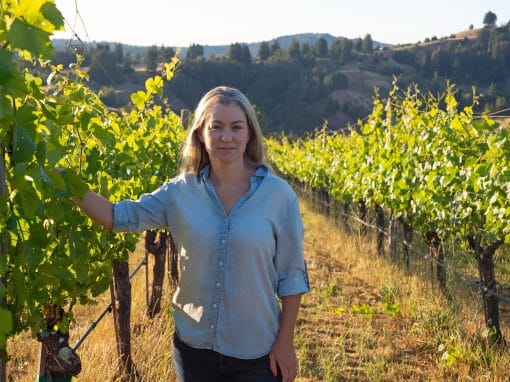
Featured photo at top by Wildly Simple Productions, courtesy of Calera Wines.