So what does it mean to ‘taste’ an American Viticultural Area (AVA)? Having spent a few days immersing myself in the Yamhill-Carlton AVA of Oregon’s Willamette Valley, I’ve tasted a lot of excellent wine, but I find myself wondering whether I’m tasting a place as much as I’m tasting a community.
Step away from the platonic ideals of appellations, perhaps best embodied by the climats of Burgundy, and the definition of wine regions becomes at least as much a political and social exercise as a climatic or geological one.
In the US, our AVAs are first and foremost political constructions, arising solely through the petition of a group of people to draw boundaries around a section of the country and call it a wine region. The petition made to the government to create an AVA requires substantial historical and environmental justifications. But notably, the criteria for creating an AVA do not include any determination that the wines from that region taste different from those nearby.
Those making such a petition may believe that to be the case, but they are not asked to prove it. As a wine writer, I’ve even participated in blind-tasting exercises conducted by newly granted AVAs seeking, post facto, to characterise the organoleptic differences that might set them apart from neighbouring regions. In all honesty, I’ve never come away from such tastings with a stark enough impression of difference to clearly define what a particular AVA ‘tastes like’.
Such exercises invariably showcase myriad exceptions to even the broadest generalisations about the ‘character’ of a region’s wines. This is due in large part to the fact that, unlike in European appellations, AVAs come with no regulations or restrictions on winemaking or viticulture whatsoever.
Continue reading this article on JancisRobinson.com.
This article teases my monthly column at JancisRobinson.Com, which is available only to subscribers of her website. If you’re not familiar with the site, I urge you to give it a try. It’s only $135 a year (25% off for the holidays!), and well worth the cost, especially considering you basically get free, searchable access to the Oxford Companion to Wine ($65) and maps from the World Atlas of Wine ($50) as part of the subscription costs. Click here to sign up.
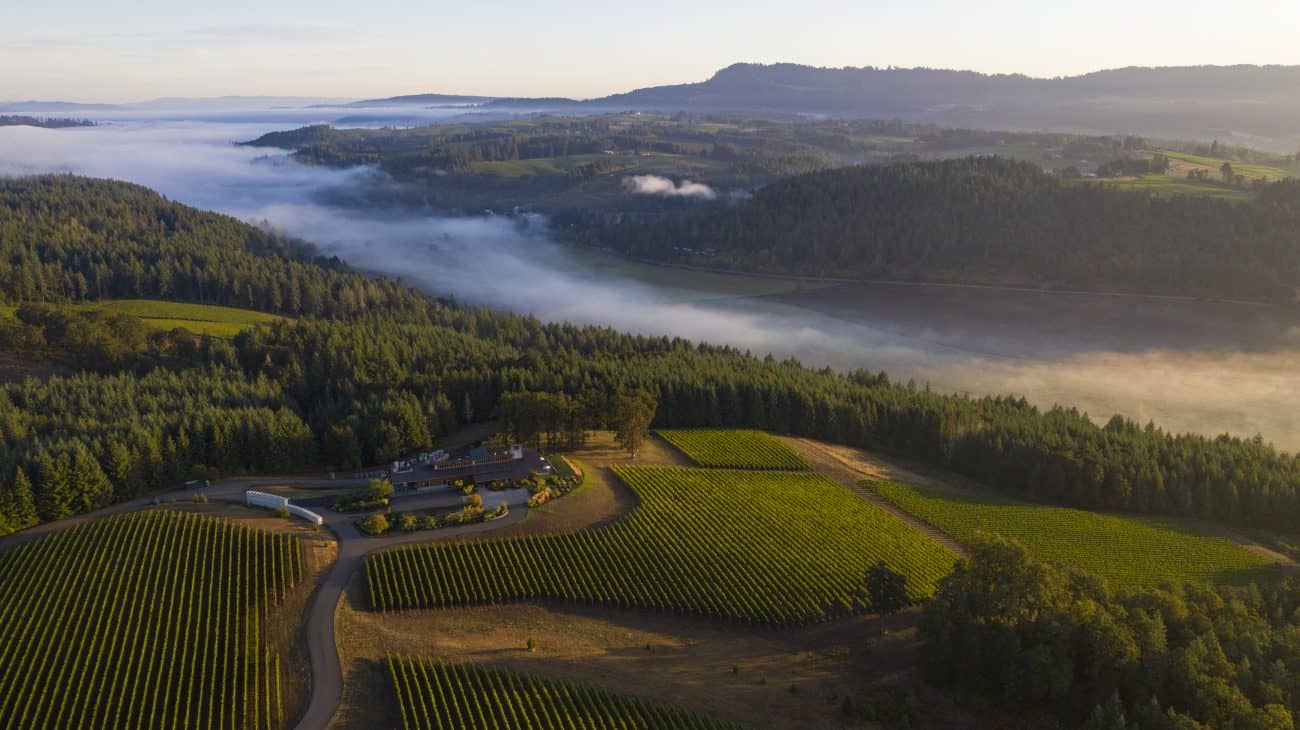
Photo at top: the Penner-Ash Vineyard, courtesy of the winery.