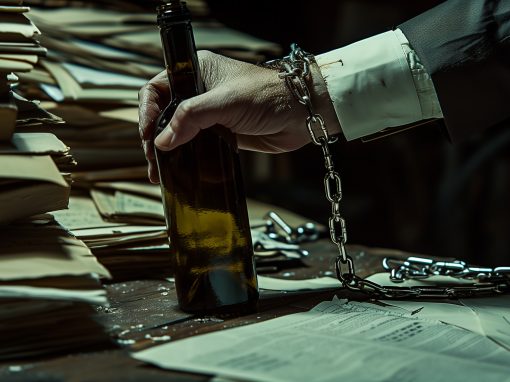
We live in a time of trade wars, where terms like protectionism and tariffs have become not only buzzwords but triggers for alarm, outrage, and partisan bickering. Yet we cannot avoid the reality that we operate within a global economy, and both businesses and governments must find ways to thrive amid intense international competition, where the playing field rarely approaches anything resembling level.
In the wine industry, we place great importance on origin and on the uniqueness of wine as an agricultural product tied to a specific place. Which is why, when the government imposes tariffs (historically used to limit imports and boost sales of domestic products) on imported wine, industry voices are quick to point out that consumers seeking Champagne are unlikely to simply switch to domestic sparkling wine when their favorite Champagnes become unaffordable due to tariffs.
Federal (and some state) labeling laws and related legislation are generally designed to protect principles of place of origin and the consumer’s interest in knowing where products come from. That is why it is now illegal to label a California Pinot Noir as “Burgundy,” and why, if you make a “Texas” wine with any Texas AVA on the label, 100% of the grapes in the bottle must be grown in Texas.
At the moment, however, it remains possible to make a wine labeled “American Wine” when up to 25% of it consists of imported bulk wine from other countries. You might ask, “What is the big deal?” After all, a California Cabernet Sauvignon may legally contain up to 25% of other grape varieties, such as Merlot.
The difference is that the United States is the only major wine-producing country that allows this practice with respect to origin. If you make a wine labeled Vin de France, then 100% of that wine must come from France. The same is true across every country in the European Union, as well as in Australia and New Zealand.
Why does this exception exist in the United States? Follow the money.
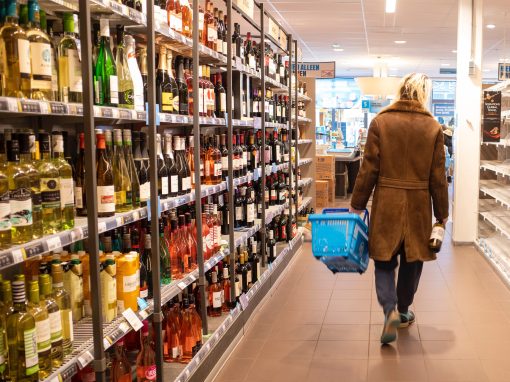
The largest supermarket wine brands, produced by companies such as Gallo, The Wine Group, Constellation, and Delicato, often carry the American appellation. By incorporating up to 25% imported bulk wine, these producers improve their profit margins.
Imported bulk wine is typically less expensive than domestically produced wine or grapes, and existing policy creates a tax advantage: import duties on bulk wine can effectively be offset by exporting an equivalent volume of wine. This amounts to an incredibly valuable subsidy for imported bulk wine. Needless to say, nothing resembling such a subsidy exists when it comes to growing or making wine domestically.

This situation might not pose a significant problem if the wine market were expanding rapidly. But we all know that is not the case. Grape growers in California are struggling to sell their fruit. Vineyards are being removed because there is insufficient demand to sustain them economically. If the millions of gallons of “American” wine produced each year were made from 100% American grapes, growers might face a far less precarious future.
That’s the rationale behind California Assembly Bill 1585. The bill would require that any wine labeled with the “American” appellation and made or bottled in California must be produced from 100% American-grown grapes. Simple as that.
Ideally, such a rule would be enacted at the federal level, but that appears unlikely. Given that roughly 80% of U.S. wine is produced in California, state-level legislation can easily achieve a similar practical effect.
While this proposal will undoubtedly be opposed by those who benefit from the flexibility of current regulations, the transparency required by AB1585 would benefit consumers, support growers, and strengthen the industry overall.
Consumers deserve to know where the products they consume originate. Many also want to support domestic agriculture. Grape growers deserve the opportunity to compete on fair terms and to sustain their livelihoods. The wine industry, in turn, benefits from greater trust and improved integrity when it provides the transparency that consumers increasingly expect.
AB1585 is currently under consideration in the California legislature, and its passage is far from certain. I have submitted a letter in support of the bill and encourage other California residents to do the same. A recent Lodi Winegrowers blog post provides a clear explanation of the issue, along with a template and instructions for contacting legislators.
Let’s make American wine truly American and offer meaningful support to the farmers who sustain it.