This past July 28th, the wine world mourned the death of pioneering winegrower David Hirsch, who showed the California wine industry, and the wider world, that Pinot Noir could be grown brilliantly a mere 3 miles from the chilly Pacific Ocean in the shadow of towering redwoods.
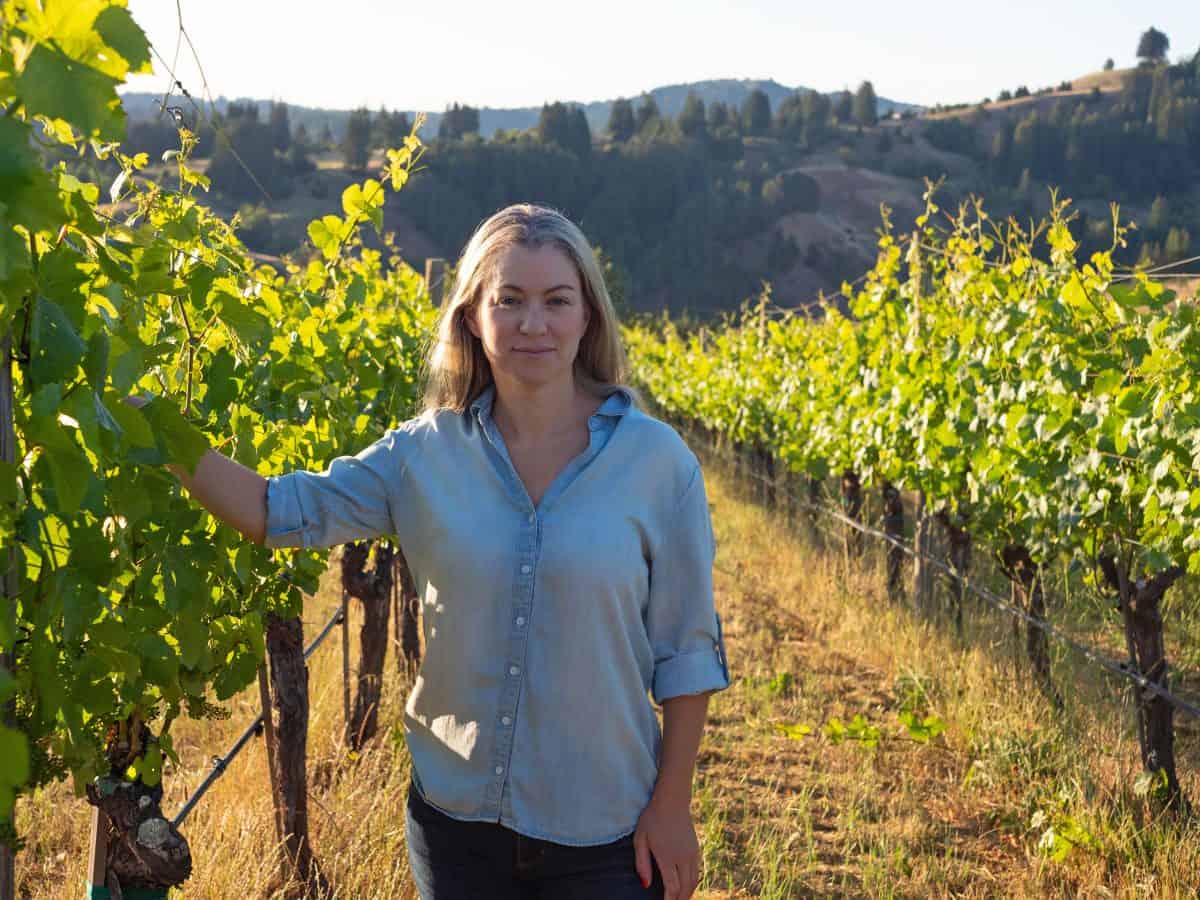
A 2014 tractor accident put the then-70-year-old Hirsch in a wheelchair and hastened his daughter Jasmine’s move into the role of general manager in 2015. She also became the estate’s winemaker in 2019, at which point consulting winemaker Michael Cruse also joined the team. After a long recovery, the elder Hirsch continued to work in the vineyards and winery until shortly before his death this summer.

I’ve been tasting wines made from Hirsch Vineyard fruit for the last 20 years, and have been lucky enough to own a number of bottles dating back to the early 1990s made by Littorai and Williams-Selyem. The evolution of the winery since the estate launched its own wines in 2002 has been remarkable. What has always been a site capable of conveying a purity of stony power and grit, with its more beguiling charms unlocked only by some time in the bottle, has become a place of much more approachable complexity and subtle differentiation.
To put it bluntly: for years, many Hirsch wines were hard to drink in their youth—somewhat impenetrable and slow to demonstrate their grace. Today, speaking especially of the wines made under the estate’s own label, that is no longer the case. While still offering incredible structure, delineation, nervosity, and stony, herbal minerality, Hirsch wines are more perfumed, more complex, more expressive, and more pleasurable to drink in their youth. They only get better with time in the bottle. Some of this undoubtedly has to do with maturation—of the vines themselves, and of the farming practices and team that cares for them—but there is more afoot.
I’m not willing to give the vines all the credit. Hirsch Vineyards is making better wines than it ever has, and I think it’s mostly Jasmine’s fault.
A Remarkable Place
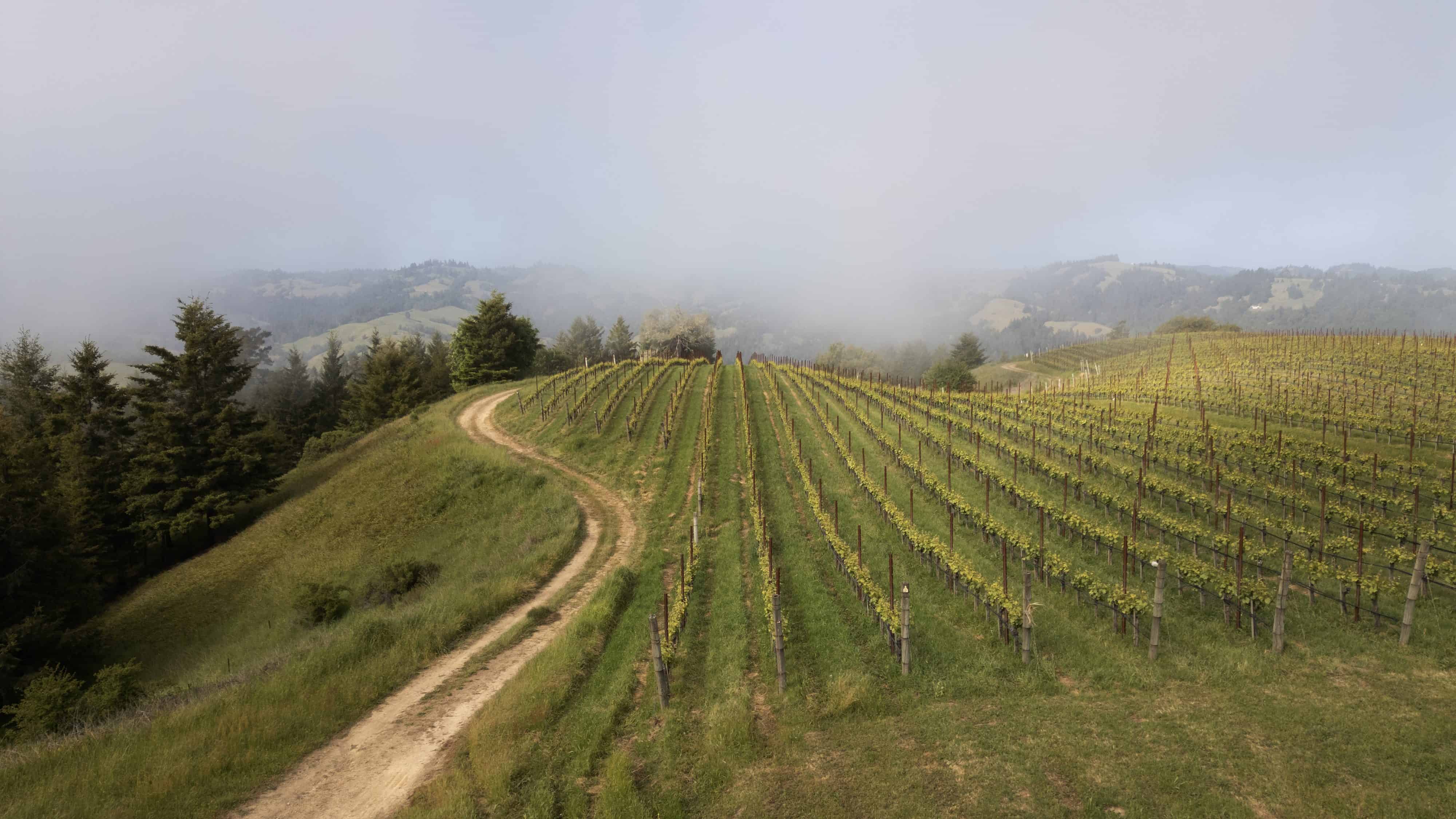
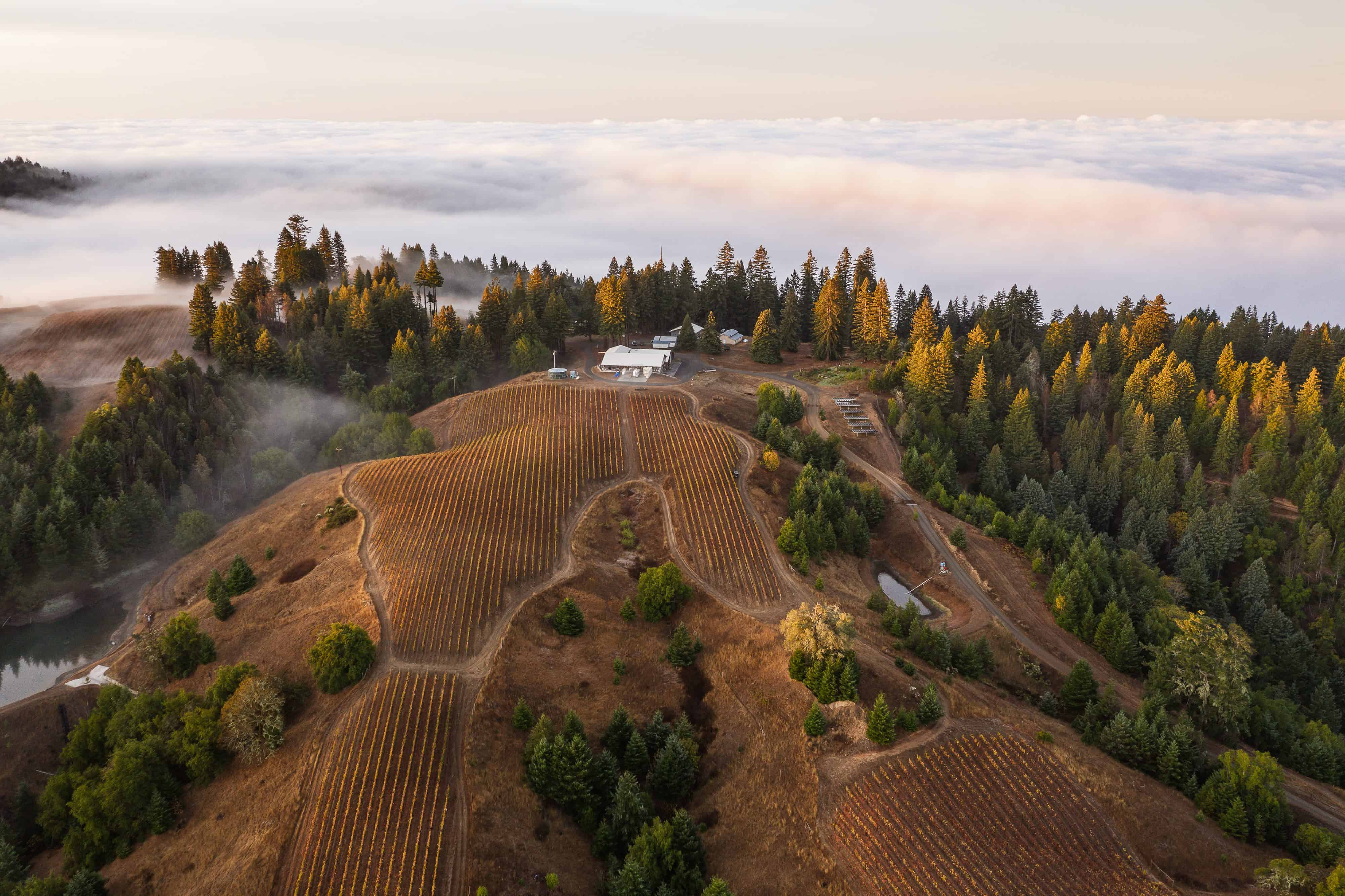
Hirsch’s 72 planted acres sit within a 1,000-acre property atop a ridgeline at 1,500 feet of elevation with views of the Pacific Ocean. The winemaking project began with a mere 2 acres of Pinot Noir, put into the ground with great difficulty in 1980, two years after Hirsch purchased the abandoned sheep ranch with some idea of joining the back-to-the-land movement. At that time, hardly anyone had dreamed of making wine, let alone Pinot Noir, so close to the Pacific. Today, that small section of the West Sonoma Coast has its own AVA named Fort Ross-Seaview, established in 2012.
Inundated by coastal fog, battered by chilly winds straight off the Pacific, the estate receives an average of 80 inches of rain each winter, and then virtually none all summer, as the sun bakes the scraggly grasses and cover crops brown and crispy.
Just half a mile from the San Andreas Fault (on the east side, safe from that mythical fate of falling into the ocean one day), the estate’s mixed-up, diverse geology and undulating topography have been shaped by the grinding forces at work along that famous fault.
Lovingly described by the Hirsch team as “haphazard,” the soils of the estate are indeed a dizzying array of sedimentary (ranging from sand to iron-rich sandstone to shale) and metamorphic (schists and serpentines) layered over deeper basaltic formations that underlie parts of the Coast Range.
Today the estate has been carefully replanted and divided into 67 discrete farming blocks which are used to assemble the estate’s portfolio of Pinot Noirs, a rosé, and a Chardonnay. Some wines are expressions of individual blocks, some are assembled from contiguous parcels, and others represent blends of many or even all the estate’s plantings.
The vineyards have been cultivated using biodynamic principles since 2011 by a vineyard team led by Everardo Robledo, who lives on site and has been managing the vineyards for more than 30 years.
An Intuitive Cellar
As you might expect from a property that has been taking a biodynamic approach for 15 years, winemaking at Hirsch remains fairly simple and low-intervention. After a long cold soak, grapes are fermented in open-top fermenters with ambient yeasts, rarely using whole clusters for Pinot Noir. The site’s exposure and thin soils result in tiny clusters of concentrated grapes with thick skins, all of which means plenty of tannic structure without getting the stems involved. The Chardonnay is pressed as whole clusters to barrel for fermentation with ambient yeasts.
Punchdowns and pumpovers are used gently for extraction of Pinot Noir, and then the red wines are pressed off to barrel using a basket press. All wines go through natural malolactic conversion in their own time. Most wines spend between 11 and 18 months in mostly used oak (30% new for Pinot Noir, 20-25% new for Chardonnay) before being bottled. Hirsch prefers to bottle-age wines anywhere from 12 to 24 months before putting them on sale.
In 2020, the winery produced its first rosé, a wine that Jasmine and her father had talked about making for years. While most rosé producers aim for freshness in the form of short fermentations and a quick release to the market, Hirsch takes a very different approach, making their rosé much more like their Chardonnay.
The fruit is picked just a few days before it would be picked for their normal Pinot Noir, then partially destemmed and pressed into 30% new French oak barrels for fermentation. It ages for 10 months on the lees in barrel and then another 10 to 12 months in bottle before release, yielding a darker, extremely complex and ageworthy rosé that rewards contemplation. A porch pounder this is not. It is savory and tannic, carrying herbal and nutty tones, and doesn’t try to hide its oak influence.
The introduction of the estate’s rosé and the evolution of its wines are part and parcel of what I see as a progression in the estate’s expression of its unique site, guided by an increasingly sensitive mind and hand.
Since taking over winemaking in 2019, Jasmine Hirsch has been working both in the vineyard and in the cellar to achieve more balance between the site’s tannin expression and what she calls “fruit concentration” in the wine. Anywhere else in Northern California, the idea of driving towards more fruit concentration in Pinot Noir might give me pause. But on the windswept ridgetops of the far West Sonoma Coast where sometimes it’s hard to grow Pinot Noir that tops 12% in alcohol, the idea of fruit concentration is a little less scary.
The work that Jasmine and team have been doing in the vineyard (replanting, adjusting row orientations, managing soil health) and in the cellar (gentler infusion than hard extraction, softer pressings) has changed the shape of the wines on the palate. They are more inviting, more nuanced, and ultimately more expressive and pleasurable.
I’m incredibly impressed with the trajectory of Hirsch wines, and can’t wait to see what the site and its winemaker are capable of in the coming decades. David Hirsch spent decades proving that his ridgetop could make great wine. His daughter is now showing us just how great they can be.
Tasting Notes
2024 Hirsch Vineyards Chardonnay, Fort Ross-Seaview, Sonoma Coast, Sonoma, California
Light gold in the glass, this wine smells of lemon zest, lemon oil, and a hint of something deliciously smoky. In the mouth, saline flavors of lemon peel, lemon curd, and white flowers have an admirable seamlessness and breadth, while notes of white flowers and a hint of dried herbs add dimension over a stony foundation. The acidity here is delicate and filigreed, just strong enough to keep the wine from feeling flat. The dried herbs linger in the finish. Biodynamically grown fruit was whole-cluster pressed and fermented in French and Eastern European oak with ambient yeasts and no stirring. Aged for 11 months on the lees in 25% new oak and then racked to stainless steel for one month before bottling. 13.5% alcohol. 1200 cases made. Score: between 9 and 9.5. Cost: $96. click to buy.
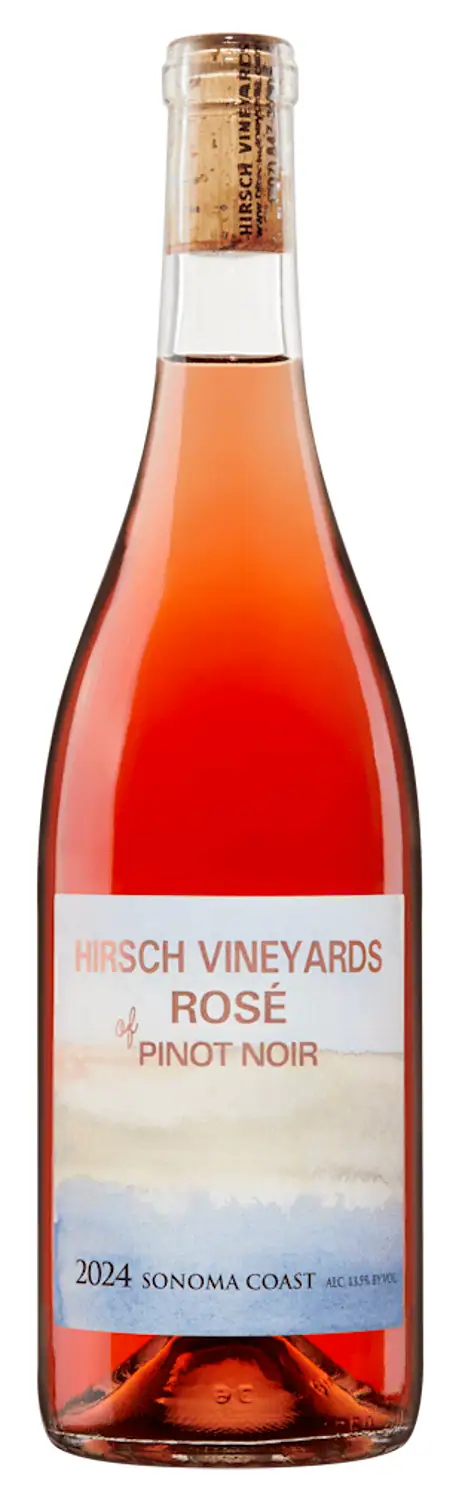
2024 Hirsch Vineyards Rosé of Pinot Noir, Fort Ross-Seaview, Sonoma Coast, Sonoma, California
Light coppery pink in the glass, this wine smells of berries, crushed nuts, and dried flowers. In the mouth, strawberry and raspberry flavors are silky smooth and shot through with dried herbs, crushed nuts, and a hint of vanilla. A faint tannic texture hangs at the edges of perception as citrus peel, sweet berries, and cream linger in the finish. Very good acidity. This is a rosé built for the long haul. Biodynamically grown fruit was destemmed and macerated overnight, then pressed. Fermented in 32% new oak with ambient yeasts and no stirring. Aged 10 months post-fermentation in the same barrels. Then aged 10 more months in bottle before release. 13.5% alcohol. 400 cases made. Score: around 9.5. Cost: $45. click to buy.
2023 Hirsch Vineyards “Raschen Ridge” Pinot Noir, Fort Ross-Seaview, Sonoma Coast, Sonoma, California
Medium garnet in the glass, this wine smells of wet earth, cherries, herbs, and wet pavement. In the mouth, vibrant flavors of raspberry and cherry fruit are wrapped in fine-grained, very stony tannins that stiffen with musculature as sweet oak, and raspberry pastilles linger in the finish along with chopped herbs and flowers. Excellent acidity. A broad-shouldered wine with cut and electricity. Biodynamically grown fruit was destemmed, cold-soaked, and fermented in open-top fermenters with ambient yeasts with a combination of pumpovers and punchdowns. Aged in 27% new oak for 18 months. 13% alcohol. 510 cases made. Score: around 9.5. Cost: $143. click to buy.
2023 Hirsch Vineyards “San Andreas Fault” Pinot Noir, Fort Ross-Seaview, Sonoma Coast, Sonoma, California
Light to medium garnet in color, this wine smells of cranberry and cherry fruit with a hint of dried herbs and flowers. In the mouth, supple fine-grained tannins wrap around a silky core of cherries and raspberries shot through with crushed nuts, dried herbs and flowers, and a touch of oak. Lovely citrus peel and herb notes linger in the finish along with some toasted wood. Very pretty. Biodynamically grown fruit was destemmed, cold-soaked, and fermented in open-top fermenters with ambient yeasts, using a combination of pumpovers and punchdowns. Aged in 32% new oak for 22 months. 13% alcohol. 3061 cases made. Score: between 9 and 9.5. Cost: $84. click to buy.
2024 Hirsch Vineyards “The Bohan Dillon” Pinot Noir, Fort Ross-Seaview, Sonoma Coast, Sonoma, California
Light to medium garnet in color, this wine smells of cherries, redwood bark, and dried flowers. In the mouth, cherries, dried herbs, sawdust, and a touch of orange peel are wrapped in fine, gauzy tannins. Excellent acidity and length, with a touch of oak lingering in the finish. This is usually a wine made with fruit from both Hirsch and some of its neighbors on Bohan-Dillon Road, but this year the wine is made from all estate fruit. Destemmed, cold-soaked, and fermented in open-top fermenters with ambient yeasts, using a combination of pumpovers and punchdowns. Aged in 27% new oak for 9 months. 13% alcohol. Score: around 9. Cost: $53. click to buy.
2023 Hirsch Vineyards “East Ridge” Pinot Noir, Fort Ross-Seaview, Sonoma Coast, Sonoma, California
Light to medium garnet in the glass, this wine smells of herbs, wet earth, raspberry, and cranberry fruit. In the mouth, cranberry and cherry fruit are wrapped in gauzy tannins and shot through with dried flowers and sweet oak notes. Supple and silky, with a nice stony quality underneath. Lovely acidity. This wine has a beautiful presence on the palate. Biodynamically grown fruit was destemmed, cold-soaked, and fermented in open-top fermenters with ambient yeasts, with a combination of pumpovers and punchdowns. Aged in 37% new oak for 18 months. 12.7% alcohol. 465 cases made. Score: between 9 and 9.5. Cost: $132. click to buy.
2023 Hirsch Vineyards “Reserve” Pinot Noir, Fort Ross-Seaview, Sonoma Coast, Sonoma, California
Medium garnet in color, this wine smells of cherries and raspberries, dried herbs, and flowers. In the mouth, cherry and raspberry mix with cranberry and floral notes as fine, gauzy tannins coat the mouth. Excellent acidity takes on a citrus peel brightness in the finish, kissed by the faint sweetness of oak. Wonderfully balanced and gorgeously expressive. Made from the oldest and best blocks throughout the entire estate. Biodynamically grown fruit was destemmed, cold-soaked, and fermented in open-top fermenters with ambient yeasts, using a combination of pumpovers and punchdowns. Aged in 37% new oak for 18 months. 13% alcohol. 580 cases made. Score: around 9.5. Cost: $137. click to buy.
2023 Hirsch Vineyards “Block 8” Pinot Noir, Fort Ross-Seaview, Sonoma Coast, Sonoma, California
Light to medium garnet in color, this wine smells of flowers, wet stone, herbs, and earth. In the mouth, fine tannins wrap around a core of redcurrant and sour cherry fruit, electric with mouthwatering acidity. There’s something positively racy about this wine that also incorporates a bit of salinity. Redcurrant notes linger with just the faintest whiff of sweet oak in the finish along with orange oil. Mouthwatering and electrically vibrant. Block 8 is the only place on the estate with the iron-dominated Boomer-Mendocino soil profile and 40-70% rock content. Biodynamically grown fruit was destemmed, cold-soaked, and fermented in open-top fermenters with ambient yeasts, and a combination of pumpovers and punchdowns. Aged in 32% new oak for 18 months. 13.7% alcohol. 500 cases made. Score: between 9.5 and 10. Cost: $153. click to buy.
2023 Hirsch Vineyards “West Ridge” Pinot Noir, Fort Ross-Seaview, Sonoma Coast, Sonoma, California
Light to medium garnet in the glass, this wine smells of dried flowers, cranberries, and candied raspberries. In the mouth, perfumed notes of raspberries, sour cherries, and cranberries are wrapped in gauzy tannins and shot through with a hint of sweet oak. Gorgeously supple and silky in texture, this is a very sensual wine on the palate. Excellent acidity. Biodynamically grown fruit was destemmed, cold-soaked, and fermented in open-top fermenters with ambient yeasts, and a combination of pumpovers and punchdowns. Aged in 29% new oak for 17 months. 12.5% alcohol. 440 cases made. Score: around 9.5. Cost: $121. click to buy.
2023 Hirsch Vineyards “Maritime” Pinot Noir, Fort Ross-Seaview, Sonoma Coast, Sonoma, California
Medium garnet in the glass, this wine smells of raspberries, flowers, conifer needles, and a hint of sweet oak. In the mouth, explosively dynamic acidity makes the mouth water as raspberry, sour cherry, and floral notes are shot through with sweet oak. Faint, gauzy tannins coat the mouth and stiffen slightly as sour cherry and raspberry notes linger through a long finish with a hint of wood. A thrilling wine that is just stupendously delicious. Biodynamically grown fruit was destemmed, cold-soaked, and fermented in open-top fermenters with ambient yeasts, using a combination of pumpovers and punchdowns. Aged in 30% new oak for 18 months. 12.5% alcohol. 340 cases made. Score: between 9.5 and 10. Cost: $117. click to buy.